Nervous System
Read This Before You Take More Collagen — Your Nervous System Is the Upstream Variable
Collagen supplements only work if your nervous system is in a state to build tissue. Here is how to regulate your body so it can absorb the protein.
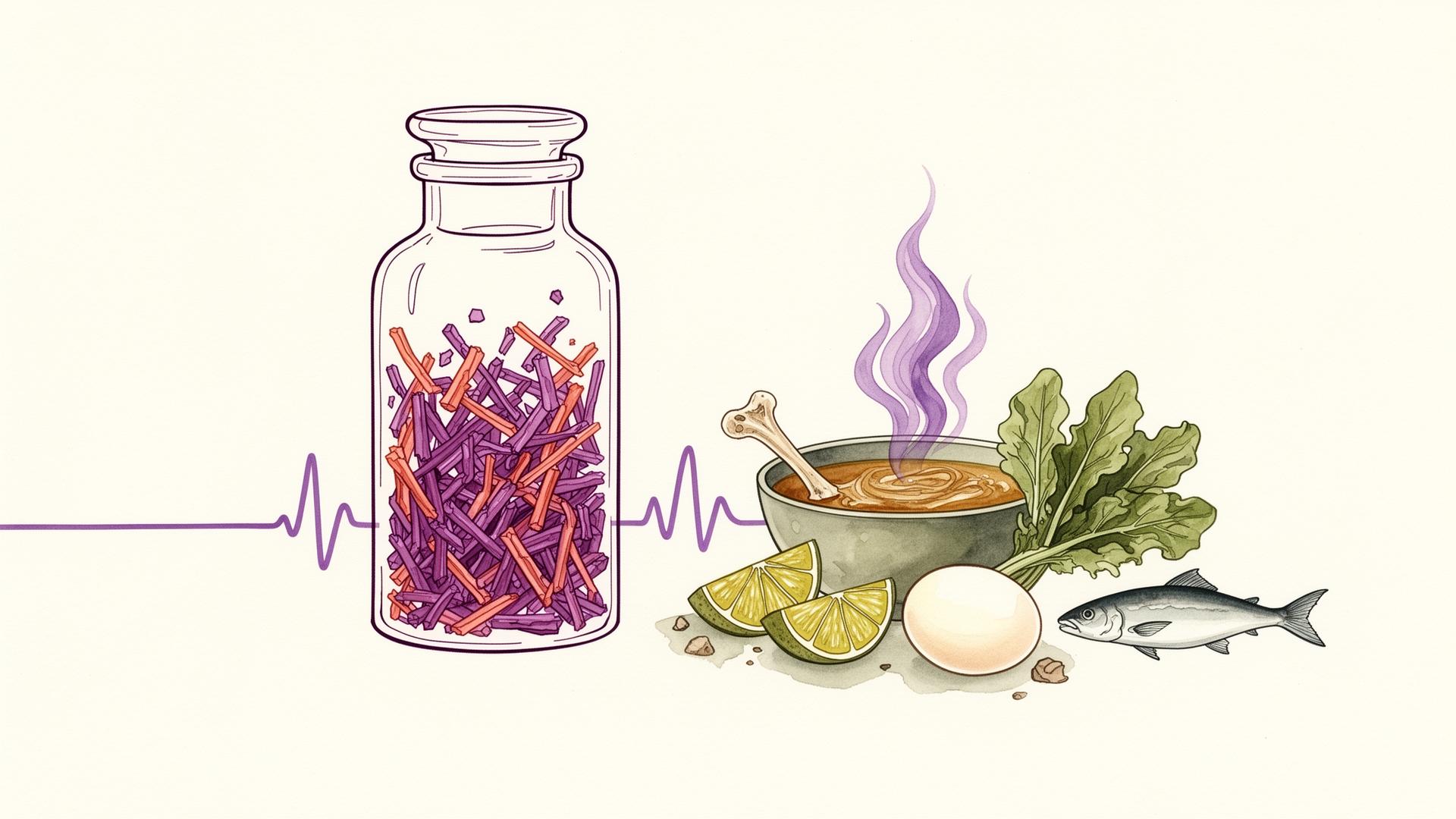
The supplement aisle promises that a fifty-dollar tub of ground-up animal parts will restore your skin and joints. I used to believe this, stirring chalky peptides into my morning coffee while aggressively clearing my inbox. I was wasting my money. Tissue repair is a strictly parasympathetic process. When your nervous system is sympathetically lit to manage daily stress, your body actively shuts down new tissue generation. You're feeding raw materials to a system that refuses to process them.
You already feel the physical friction of this state. It's the jaw that won't unclench at 3pm, and the tight shoulders in the shower when you're supposed to be relaxing. You feel tired but wired, lying awake at 11:47pm scrolling through skincare routines while your heart rate stays inexplicably high. You pour another scoop of powder into your smoothie to clear the brain fog after eating, hoping it will somehow offset the persistent buzz behind your eyes. Your body is signaling a capacity issue, and no amount of crushed protein can override that alarm.
Common Questions
What breaks down collagen internally?
Cortisol is the primary variable. When the stress response stays active, the body requires immediate glucose to manage the perceived threat. To get that quick energy, it breaks down existing protein stores, heavily targeting the collagen matrix in your skin, gut, and joints.
Can the body make its own collagen?
Your body synthesizes collagen constantly using amino acids like glycine and proline from your diet. You can't force the tissue to generate without a calm internal environment and co-factors like vitamin C and zinc. The human body manufactures the tissue directly when the nervous system permits it.
Why do collagen powders pass straight through?
A dysregulated nervous system doesn't prioritize digestion. Blood flow diverts away from the gut to the extremities, impairing nutrient absorption. Your body ignores the raw material because it is busy managing a perceived immediate threat, leaving the powder completely unabsorbed.
The HPA Axis Thrives on Breakdown
Most wellness marketing treats the human body like a vending machine. You put the powder in, and glowing skin falls out. Biology is entirely dependent on state. The most important state to understand is governed by your HPA axis, the stress-hormone control loop running from your brain to your adrenal glands.
When this system detects a threat, it floods your system with cortisol. Cortisol exists to liberate resources for an emergency. One of its primary mechanisms is breaking down existing proteins into glucose for fast fuel. The largest protein deposit in your body is your collagen matrix. A chronically elevated cortisol rhythm literally dismantles your joints and skin from the inside out to keep you moving. Adding a supplement while this loop is active simply gives your body more material to burn for quick energy. The first step in nervous system regulation is noticing when this stress response is running.
The Vagus Nerve Controls the Border
The gut is a highly sensitive, semi-permeable border crossing. Its operation is managed by the vagus nerve, the primary information highway of the parasympathetic nervous system. When the vagus nerve signals safety, blood flows to the digestive tract, allowing you to break down proteins and move them into your bloodstream.
When you run on adrenaline and caffeine, the vagus nerve pulls the parking brake on digestion. Blood diverts to your muscles. The gut lining becomes less efficient. You can invest in the most premium, grass-fed peptides on the market, but a stressed gut couldn't absorb those amino acids even if it wanted to. They pass right through or cause local inflammation. Building new tissue requires the body to feel safe enough to digest the materials. I see this constantly in sessions. People spend hundreds of dollars on supplements, completely ignoring the tension in their own stomach. Using a Vagal Tone Anchor before a meal changes how your body receives the food.
Your body requires a parasympathetic state to build new tissue.
Human Growth Hormone and Deep Sleep
Physical repair work happens almost entirely at night. During Stage 3 sleep, also known as slow-wave sleep, your pituitary gland releases a massive pulse of human growth hormone. This hormone signals your fibroblasts to start spinning up new collagen tissue. This is also the exact window when the glymphatic clearance system flushes metabolic waste from your brain.
A dysregulated nervous system destroys sleep staging. A brain stuck in hypervigilance perceives threats even in a dark, quiet bedroom. You might stay in bed for eight hours, but you'll miss the deep slow-wave stages required for that hormone release. Without that signal, your fibroblasts sit idle. A structured wind-down inside the Journal helps your brain step down into the restorative stages where actual cellular repair occurs.
The Biological Context of Amino Acids
I've stopped recommending isolated powders entirely. Your body evolved to extract nutrients from whole foods containing the complete suite of necessary builders. Extracting a single peptide and processing it into a dust removes the biological context your digestive system recognizes.
You need the precursor amino acids found in slow-cooked tougher cuts of meat, real gelatinous bone broth, and eggs. You also must have vitamin C present at the exact same time. Vitamin C is an absolute requirement for the enzymes that weave those amino acids together into strong fibrils. Getting these from real food provides the co-factors naturally. It doesn't matter how premium the supplement is if the biology rejects the delivery method.
What to do this week
- Make real bone broth. Simmer bones from quality poultry or beef with a splash of apple cider vinegar for 12 to 24 hours. When it cools in the fridge, it will look like a firm jelly. Eat a small cup of this daily.
- Practice a pre-meal downshift. Before you eat, take 60 seconds for a physiological sigh. Inhale deeply through the nose, take a second quick sip of air at the top, and exhale slowly through the mouth. Repeat this three times to nudge your nervous system into a digestive state.
- Eat vitamin C with your protein. Add a sliced bell pepper or a handful of berries to your meals. The co-factor must be present for your body to synthesize the tissue.
- Anchor your morning rhythm. Get 15 minutes of direct sunlight in your eyes within the first hour of waking. This stabilizes your circadian rhythm and increases your sleep pressure for better slow-wave sleep tonight.
Where this fits in the Kokorology system
The state of your skin, hair, and joints is a direct readout of your internal baseline. Rebuilding that baseline is the core work of Kokorology, starting with the primary mechanics in the Regulation (L1) course and supported by daily micro-practices from the Hacks library.
Closing
The only question that matters is whether your body is ready to build. Regulate the underlying system, and your biology will do exactly what it evolved to do.
- Learn the mechanics of your stress response inside Regulation (L1).
- Start with a structured recovery plan for your nervous system in The 7-Day Reset.
- Get the free protocol on the five most common physiological mistakes in The Free Guide to Your Nervous System.
TL;DR
Collagen supplements require a regulated nervous system to work. When your body is stuck in a chronic stress response, it floods your system with cortisol, which actively breaks down existing collagen for quick energy. A sympathetically driven nervous system also impairs gut absorption and destroys the deep sleep architecture necessary for tissue repair. To improve your skin and joints, you have to shift your baseline into a parasympathetic state where the body can actually digest whole-food amino acids and rebuild tissue.
Sources
- Critchley, H. (2023). Interoception and Autonomic Regulation in Stress. Journal of Neuroscience.
- Shuster, S. (2010). The dermatology of the soul. Journal of the Royal Society of Medicine.
- Chen, Y., & Lyga, J. (2014). Brain-skin connection: stress, inflammation and skin aging. Inflammation & Allergy Drug Targets.
- Takahashi, Y., Kipnis, D. M., & Daughaday, W. H. (1968). Growth hormone secretion during sleep. The Journal of Clinical Investigation.
- de Paz-Lugo, P., Lupiáñez, J. A., & Meléndez-Hevia, E. (2018). High glycine concentration increases collagen synthesis by articular chondrocytes in vitro: acute glycine deficiency could be an important cause of osteoarthritis. Amino Acids.